IIntroduction: Unlocking Computational Thinking with Bebras
Computational thinking is one of the most important skills for the future, but many students only meet it through dry textbooks or heavy coding courses. My experience was different.
Over the past four years, the Bebras computational thinking challenge has completely changed how I think about computer science. It turned puzzles into powerful lessons and helped me grow from a curious beginner into a national‑level champion.
In this post, I want to share my Bebras challenge experience, the lessons I learned, and why I believe every student, parent, and school should consider Bebras as a fun, meaningful way to unlock computational thinking.
What Is the Bebras Computational Thinking Challenge?
For those who are new to it, the Bebras computational thinking challenge is an international initiative that introduces students to computational thinking through short, engaging problems.
Instead of focusing on programming syntax, Bebras presents scenarios that ask students to:
- Analyze information
- Recognize patterns
- Design step‑by‑step solutions
- Think logically and creatively
The questions are designed to be fun and accessible, yet they often reveal how students approach complex problems. For me, Bebras was the perfect gateway into computer science—one that emphasized thinking, not just coding.
Team Legogoa: Spreading the Love for Computing
I felt compelled to share this exciting experience with others. My amazing team, “Legogoa” and I started conducting online sessions. We also created tutorial videos to help my friends and other interested students prepare for the challenge.
- Overcoming Challenges:
- One of the biggest challenges was finding engaging ways to explain complex concepts to students with varying levels of understanding. We experimented with different teaching methods, including interactive games, real-world examples, and simplified explanations using analogies.
- We also faced technical challenges in creating and distributing the tutorial videos. We overcame these by learning basic video editing and utilizing free online platforms to share our content.
- Teamwork:
- The feedback from our team members and the students we coached was incredibly rewarding.
- “Sai, your explanations were so clear! I finally understood how algorithms work,” one student exclaimed.
- Another team member shared, “Working on these tutorials together helped me deepen my own understanding of the concepts.”
- Witnessing their growth and seeing their own “aha!” moments was incredibly motivating.
- The feedback from our team members and the students we coached was incredibly rewarding.
- Incredible Impact: Large haul for Legogoa at Bebras Challenge 2024
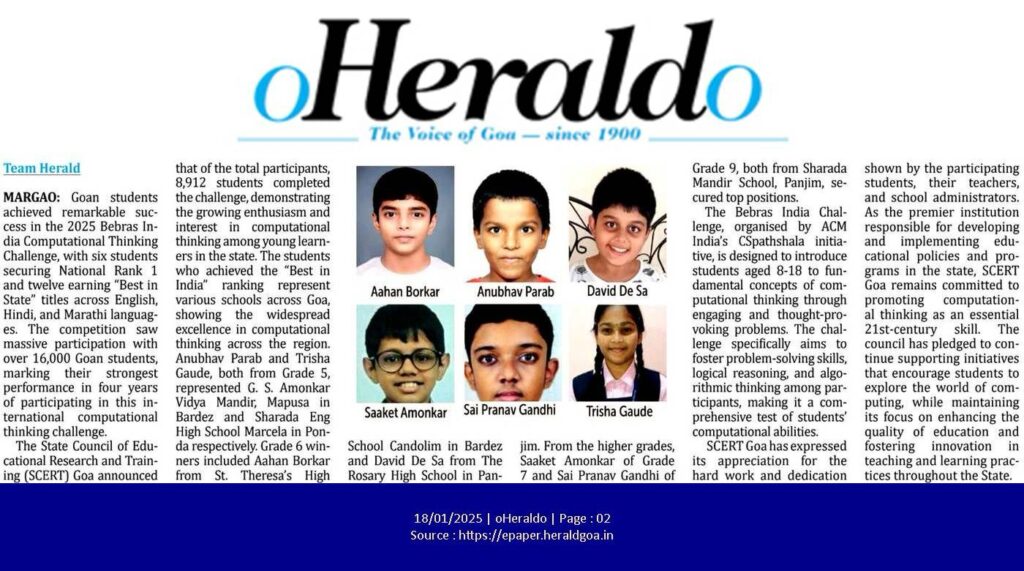
- Saaket Amonkar from Legogoa club secured Rank 1 at the National level.
- This was followed by 4 more state-level ranks
Key Insights from Our Tutorials:
- Decomposition: Breaking down complex problems into smaller, more manageable parts is crucial.
- Pattern Recognition: Identifying and utilizing patterns can significantly simplify problem-solving.
- Abstraction: Focusing on the essential elements of a problem while ignoring irrelevant details is key.
A Journey of Continuous Improvement
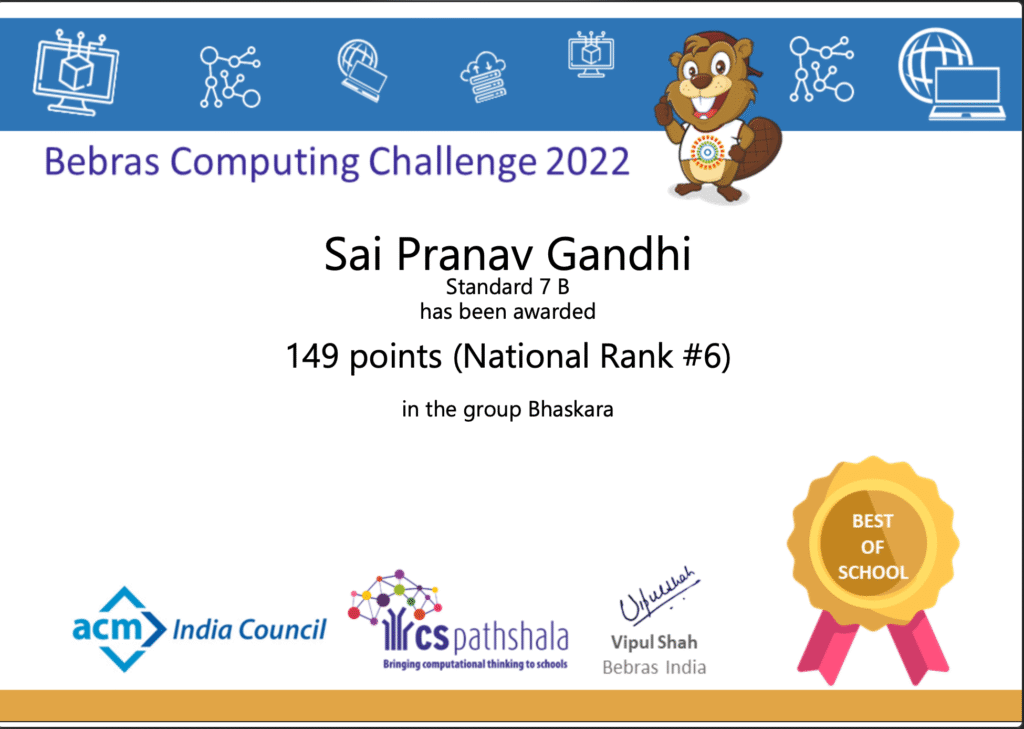
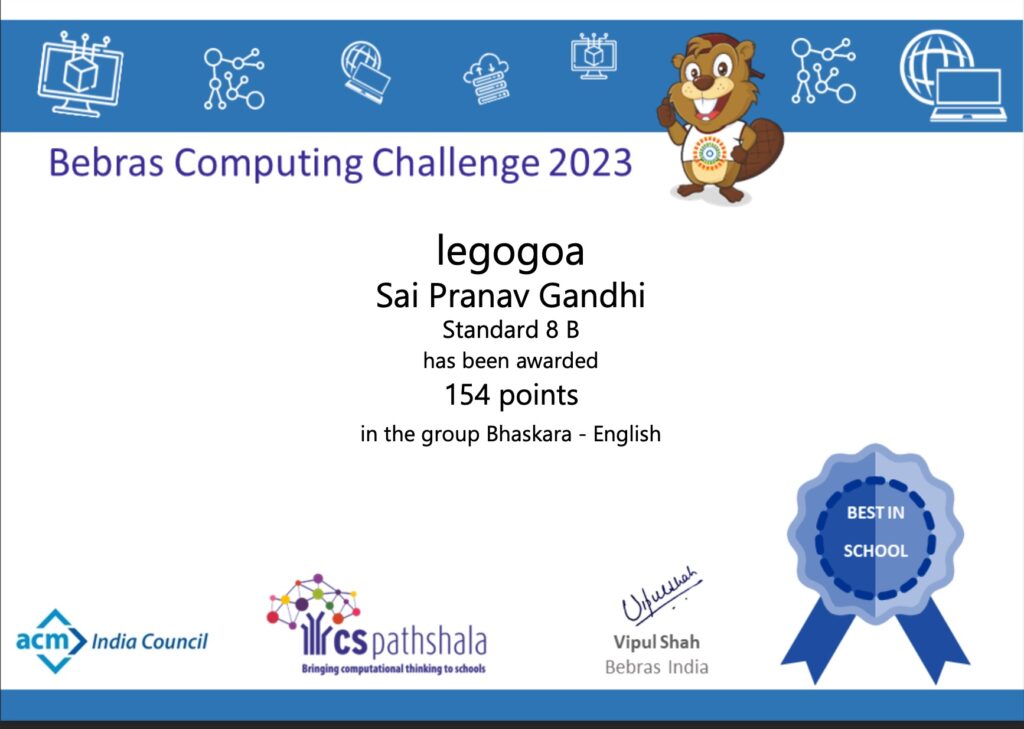
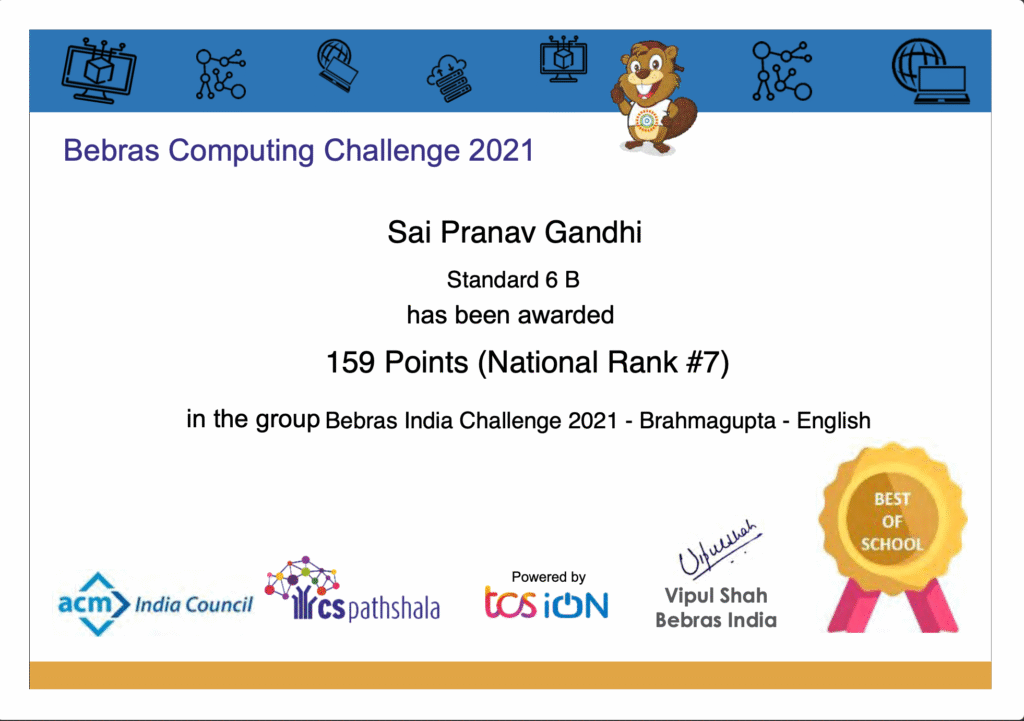
In 2021, I secured a 7th rank in the challenge, a significant milestone that fueled my determination to excel further. The following year, I dedicated myself to rigorous preparation, focusing on improving my speed and accuracy. I practiced consistently, analyzed past challenges, and sought feedback from my team members.
Reaching New Heights: National Champion
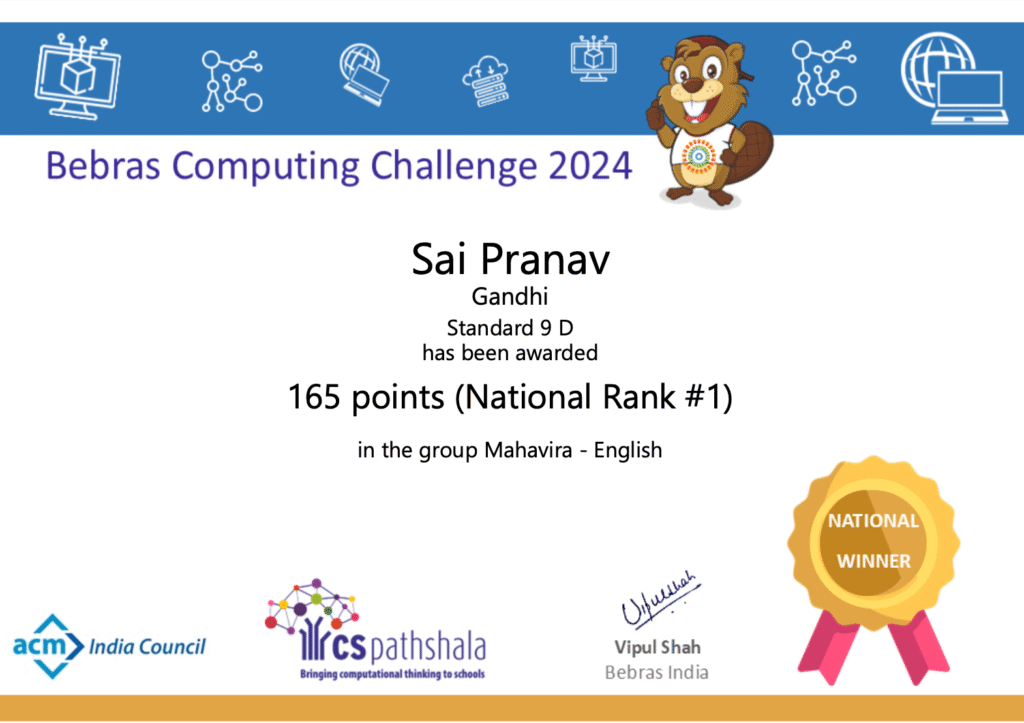
And then came 2024. I dedicated myself unwaveringly to the task. With the support of my team, I achieved a perfect score in the Bebras challenge. I emerged as one of the National Champion among 40,000 participants! This experience has been truly humbling and inspiring.
The Benefits of Bebras: Beyond the Competition
Bebras has not only honed my computational thinking skills but also instilled in me the importance of:
- Critical Thinking: Analyzing problems from different perspectives and developing creative solutions.
- Problem-Solving: Breaking down complex challenges into smaller steps and devising effective strategies.
- Collaboration: Working effectively as a team, sharing knowledge, and supporting each other\’s growth.
I strongly encourage everyone to explore the world of Bebras. It’s an incredible opportunity to discover the fascinating realm of computer science and develop valuable life skills.
Visit the official Bebras website (www.bebras.org) to learn more about the challenges and how to participate.
I’m truly grateful for this incredible journey and excited to continue exploring the exciting world of computer science.